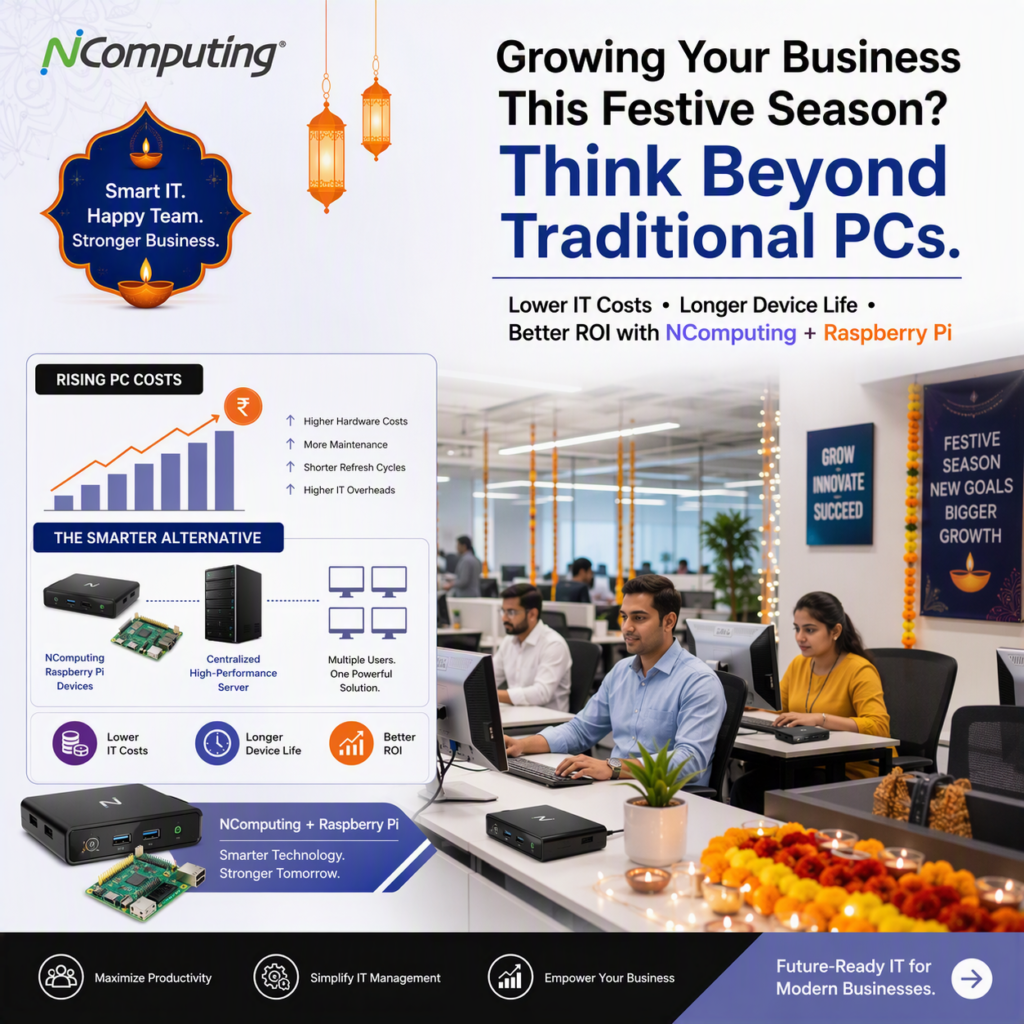
As businesses enter the third quarter of 2026 and prepare for the festive season, many are expecting higher sales, expansion, and increased customer demand. To support this growth, organisations often need additional computers for employees, customer service teams, and daily operations.
However, rising IT hardware prices continue to challenge business budgets. The cost of purchasing, managing, and replacing traditional desktop computers is increasing every year, making it important for businesses to evaluate smarter technology investments.
Do you really need more traditional PCs, or is there a better and more cost-effective way to expand your IT infrastructure?
The Rising Cost of IT Infrastructure
For many organisations, business growth means purchasing new desktops, monitors, software licences, and other IT equipment. While this approach is familiar, it often leads to higher long-term costs.
In addition to the initial purchase price, businesses must also consider:
- Hardware maintenance and repairs
- Electricity consumption
- IT support and administration
- Software updates and management
- Future hardware replacement costs
As organisations grow, these expenses can quickly add up and impact overall profitability.
The Challenge with Traditional PCs
Most businesses today rely on traditional x86-based desktop computers. While these systems are widely used, they typically have a lifecycle of only 4 to 5 years.
Over time, ageing hardware can lead to slower performance, increased maintenance requirements, and higher support costs. As a result, organisations are forced into regular hardware refresh cycles, requiring repeated investments every few years.
For businesses planning long-term growth, this can become a significant financial burden.
A Smarter Alternative: NComputing with Raspberry Pi
To address these challenges, many organisations are exploring NComputing with Raspberry Pi.
Unlike traditional PC environments, NComputing uses a centralised computing model that allows multiple users to access business applications efficiently while reducing hardware costs and simplifying IT management.
This approach helps organisations deliver a reliable computing experience without the expense and complexity of managing large numbers of individual desktop computers.
Longer Hardware Life, Better ROI
One of the biggest advantages of NComputing is hardware longevity.
Traditional desktop computers often need replacement every 4 to 5 years. In contrast, Raspberry Pi-based ARM devices can continue operating for much longer periods, often exceeding 10 years when properly deployed and maintained.
This extended lifespan helps organisations:
- Reduce hardware refresh costs
- Improve return on investment (ROI)
- Decrease downtime and disruptions
- Maximise the value of IT budgets
Centralised Management Made Easy
Managing dozens or hundreds of desktop computers can be time-consuming for IT teams.
With NComputing’s centralised architecture, businesses can simplify administration by managing users, updates, and systems from a central location. This reduces management effort and improves operational efficiency.
For small and medium-sized businesses with limited IT resources, centralised management offers a practical and scalable solution.
Lower Power Consumption
Energy costs continue to rise, making power efficiency an important consideration for modern businesses.
Raspberry Pi devices consume significantly less power than traditional desktop PCs. Over time, lower electricity usage can result in substantial savings, especially for organisations operating multiple systems across offices, classrooms, training centres, or branch locations.
Why Businesses Are Considering NComputing
 Lower hardware investment
- Reduced electricity costs
- Longer hardware lifecycle
- Simplified IT management
- Lower maintenance costs
- Easy scalability for growing teams
- Improved ROI and lower Total Cost of Ownership (TCO)
Planning for Growth This Festive Season?
As businesses prepare for stronger sales and expansion during the festive season, technology decisions will play a critical role in controlling costs and supporting growth.
Before investing in new desktop computers next quarter, consider evaluating NComputing with Raspberry Pi as part of your technology strategy.
A smarter infrastructure today can help your organisation reduce costs, support more users, and achieve better business results for years to come.